
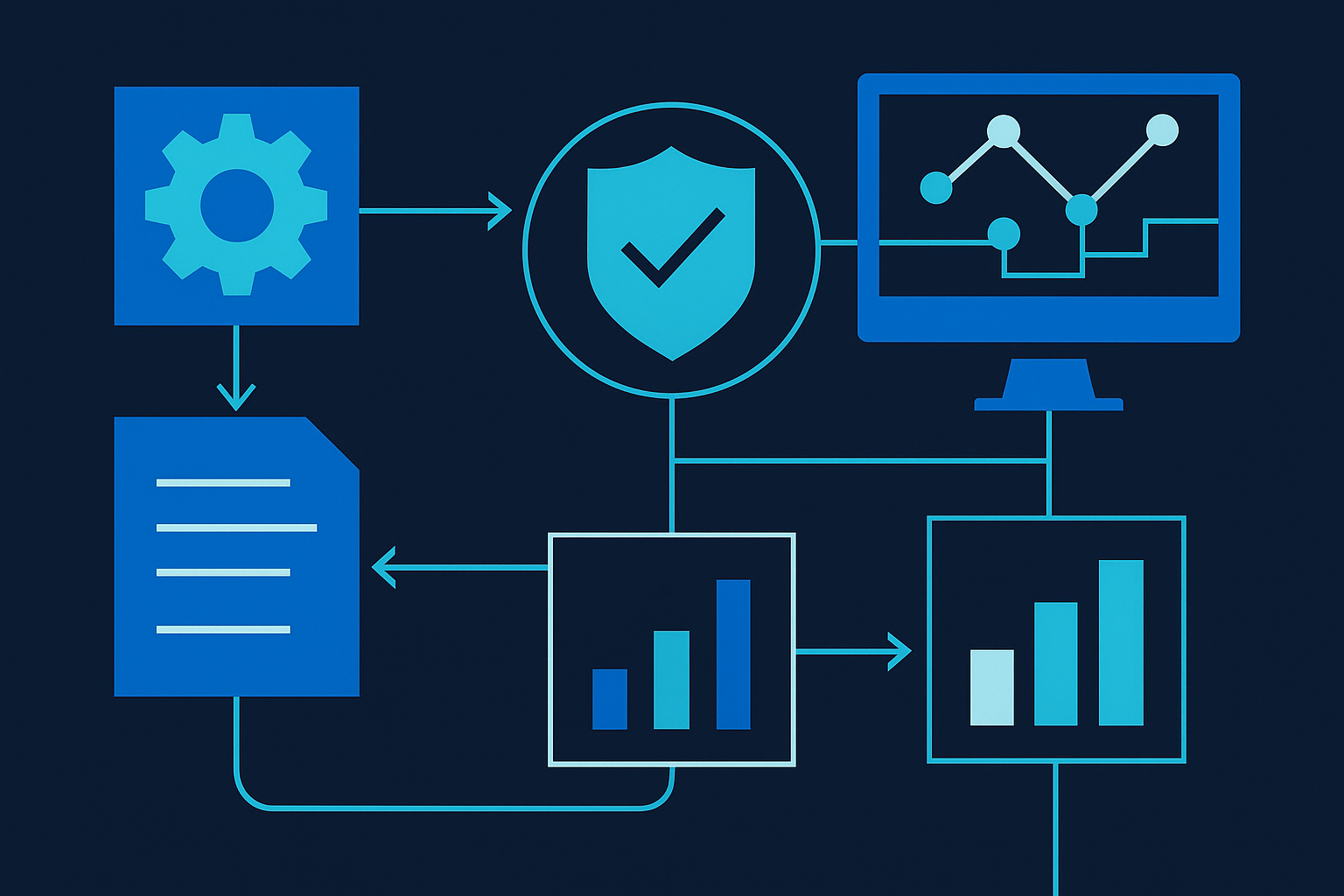
The workflow automation market is booming. But the platforms driving that growth were designed for GTM teams at SaaS companies — not for ops managers at medical device firms trying to keep compliance teams happy.
The workflow automation market hit $26 billion in 2026. Vendors are racing to add agentic AI, multi-step orchestration, and 150-plus data connectors. The pitch is irresistible: connect your systems, eliminate manual steps, let your team focus on what matters.
But here's what the market research won't tell you: almost none of the platforms driving that growth were built with you in mind.
If you run operations at a medical device company, a financial services firm, a regional manufacturer, or a legal services outfit — the automation ecosystem was largely designed for SaaS startups trying to fill their sales pipeline faster. GTM automation, CRM-native workflows, RevOps orchestration. That's where the product roadmaps are pointing.
Not at your change control process. Not at your audit trail requirements. Not at the part where your compliance team needs to sign off before a workflow goes anywhere near production.
Here's what the automation pitch deck leaves out.
Regulated industry operators face a set of constraints that most automation vendors treat as edge cases — if they consider them at all. Your workflows don't just need to work. They need to be documented. Validated. Defensible when a regulator asks who approved what and when.
When a medical device company automates a supplier review process, that automation has to survive an FDA audit. When a financial services firm routes compliance alerts through an AI-assisted triage workflow, that workflow needs to meet FINRA recordkeeping standards. When a professional services firm uses AI to flag contract risk, the firm still carries liability for the output.
None of that is in the Clay pitch deck. None of that shows up in the Zapier onboarding flow.
And so what happens? Mid-market operators in regulated industries do one of two things. They either buy the shiny platform and discover six months later that their compliance team won't touch it. Or they stay on manual processes — spreadsheets, email threads, shared drives — because at least those are defensible.
Both outcomes are expensive. Only one of them shows up in the ROI analysis.
Forget the platform selection conversation for a minute. The more important question is: do you actually understand the workflow you're trying to automate well enough to automate it safely?
Most mid-market companies in regulated industries don't. Not because they're behind — because nobody told them this was the first step.
Before you pick a tool, you need to map the compliance surface of the workflow. That means answering four questions:
1. Where does human judgment currently live in this process?
Not where you think it should live — where it actually lives today. Every time someone makes a call that isn't purely mechanical, that's a decision point that automation has to either replicate, escalate, or flag.
2. What does your regulator care about in this process?
Audit trails. Approval authority. Data residency. Version control. The answer is different for an FDA-regulated device company than it is for a FINRA-registered broker-dealer. You need to know your specific answer before you build anything.
3. What's the failure mode?
If this automated workflow produces the wrong output, what's the blast radius? A misrouted sales lead is annoying. A miscategorized adverse event report is a regulatory event. Failure mode determines how much validation work the workflow needs before it goes live.
4. Who owns it after it's built?
This is the question nobody asks in the vendor demo. Automated workflows break. Data sources change. Regulations update. If the person who built it leaves, can someone else maintain it without rebuilding from scratch? If the answer is no, you don't have an asset — you have a dependency.
Once you've done that compliance surface mapping, platform selection becomes more straightforward. You're not asking "which tool has the best features?" You're asking "which tool can actually operate inside our constraints?"
For most mid-market regulated companies, that rules out a lot of the GTM-native platforms immediately. What you're looking for is different: a platform that can generate human-readable logs of every action taken, support role-based access controls that match your existing approval hierarchy, integrate with your existing systems of record without requiring those systems to be rebuilt, and — critically — have a vendor who will sign a BAA, DPA, or whatever your legal team requires.
That's a shorter list. But it's the right list.
If your leadership team is pushing for automation — and in 2026, most of them are — don't start with the tools. Start with a short-list of three to five workflows that are genuinely painful, genuinely manual, and genuinely rule-bound enough that you can document what "correct" looks like.
Map the compliance surface of each one. Identify the failure modes. Then — and only then — evaluate platforms against those specific requirements.
The $26 billion automation market will still be there when you're ready. The question is whether you build something that survives your next audit, or something that your compliance team quietly shuts down six months after launch.
We've seen both. The difference isn't the technology. It's the sequencing.
Dealing with a similar challenge?
We work with mid-market companies in regulated industries to build AI workflows that actually hold up.
Let's TalkSean Cummings
Founder of Laminar Consulting Services. Specializes in AI workflow automation for regulated industries — medical device, financial services, and complex logistics operations.