Medical DeviceGenerative AIFDA

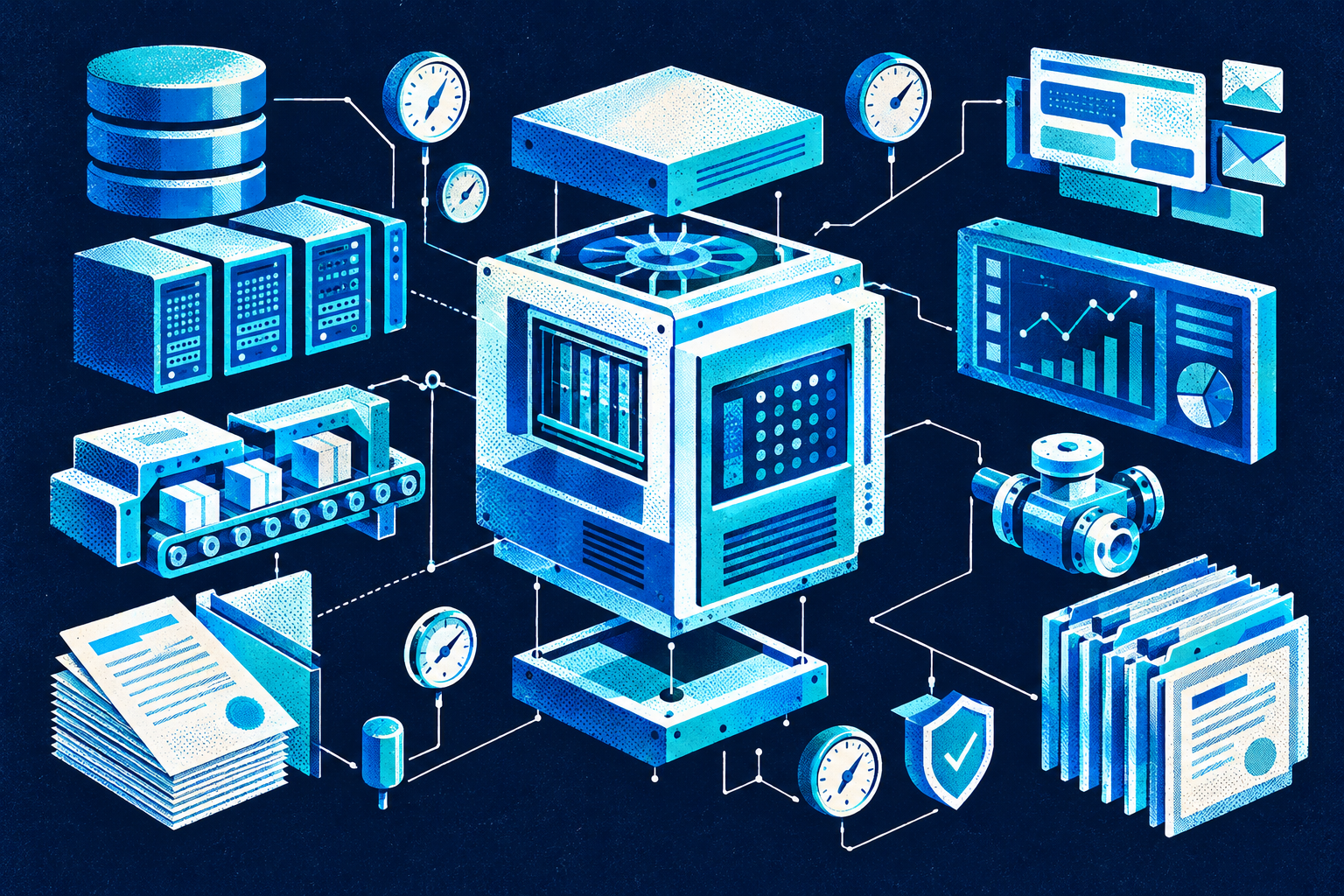
Dynamic Business's roundup of AI customer success platforms is built around subscription software. For companies that ship product or handle regulated transactions, account risk shows up first in operational hand-offs and in customer messages that may themselves be regulated records.
In October, Dynamic Business published a Tech Tuesday roundup of the best AI-powered customer success platforms for 2026. It offers a clear picture of where that software category is heading. The list sorts tools such as ChurnZero, Velaris, Custify, Staircase AI, Statisfy, Hook and Cust by fit. ChurnZero is described as the strongest fit for mid-market SaaS businesses with subscription revenue between $5M and $100M ARR. Velaris is pitched at teams of three to twenty customer success managers who spend significant time preparing for calls and writing account updates. A newer group, which the publication labels AI-native intelligence, scores relationship risk from communications data, writes account briefings and predicts expansion revenue.
Almost every tool on the list is built for subscription software companies. Most readers of this blog run something else, such as a device company, a lender, a plant or a distribution network. The underlying question still applies to them. Which accounts are at risk, and what does the account manager need to know before the next call? I think a company that ships physical product or processes regulated transactions has to answer that question from different data than these platforms are designed to read. That matters if you are being pitched similar AI features inside your CRM.
In subscription software, the product is most of what the customer experiences, and the product logs itself. Logins, feature usage, support tickets and renewal dates are all captured automatically in systems the vendor already controls. A tool that combines that usage data with the tone of emails and chat messages can produce a reasonable health score, because most of the customer's experience passes through systems the tool can see. The Dynamic Business descriptions reflect this design. They emphasize communications data, in-app engagement and Slack-based customer relationships.
For a medical device maker or a contract manufacturer, the customer's experience comes from a chain of hand-offs. A typical chain runs from quote to order entry, scheduling, production, quality release, shipping, invoicing and service. I think the main pain in most operations is visibility across those hand-offs. Sales wants to know where an order stands, what was promised and whether the account will make money. Those answers are spread across the ERP, a scheduling spreadsheet, the quality system and several inboxes. Often there is a process but no rules, so nobody is clearly responsible for telling the customer when a ship date moves.
A health score built from email tone tells you the customer is unhappy only after they have said so. The events that caused the problem happened earlier, in systems a communications tool doesn't read. Examples include a partial shipment, a lot on quality hold, a credit memo, or a third service call on the same unit. When we built LeaseIQ for Healthpeak Properties, the lease approval, legal document review and tenant improvement workflows had been running on email, spreadsheets and phone calls, so the status of a transaction lived in those threads. We built a transaction platform that put those workflows in one place and integrated with Documentum. A product company needs that same kind of groundwork before any account score means much: the hand-offs have to be recorded somewhere they can be seen.
Tools that read customer communications create an extra problem for regulated companies. At a device manufacturer, an email from a hospital saying a product failed during a procedure may be a complaint. FDA's quality system requirements expect complaints to be received, evaluated and documented through a defined process. Suppose a platform reads that email, lowers the account's relationship score and posts an alert in a team channel. The information has then been handled outside the complaint file, and possibly by people who don't know it needs to go there. Financial services firms face a similar issue with their own complaint handling and communications retention obligations.
Communications analysis can still be useful, provided the routing rules are agreed with quality or compliance before the tool is connected. Those rules should say which phrases or message types get sent to complaint intake, who reviews them and how quickly. Giving a cloud service read access to customer correspondence also needs its own security and privacy review. That review takes time, and it is better scheduled at the start than discovered halfway through a rollout.
If account risk is a concern for your sales or service leaders, these steps come before choosing a platform:
Dealing with a similar challenge?
We work with mid-market companies in regulated industries to build AI workflows that actually hold up.
Let's TalkSean Cummings
Founder of Laminar Consulting Services. Specializes in AI workflow automation for regulated industries — medical device, financial services, and complex logistics operations.