
AI GovernanceComplianceDocument Control

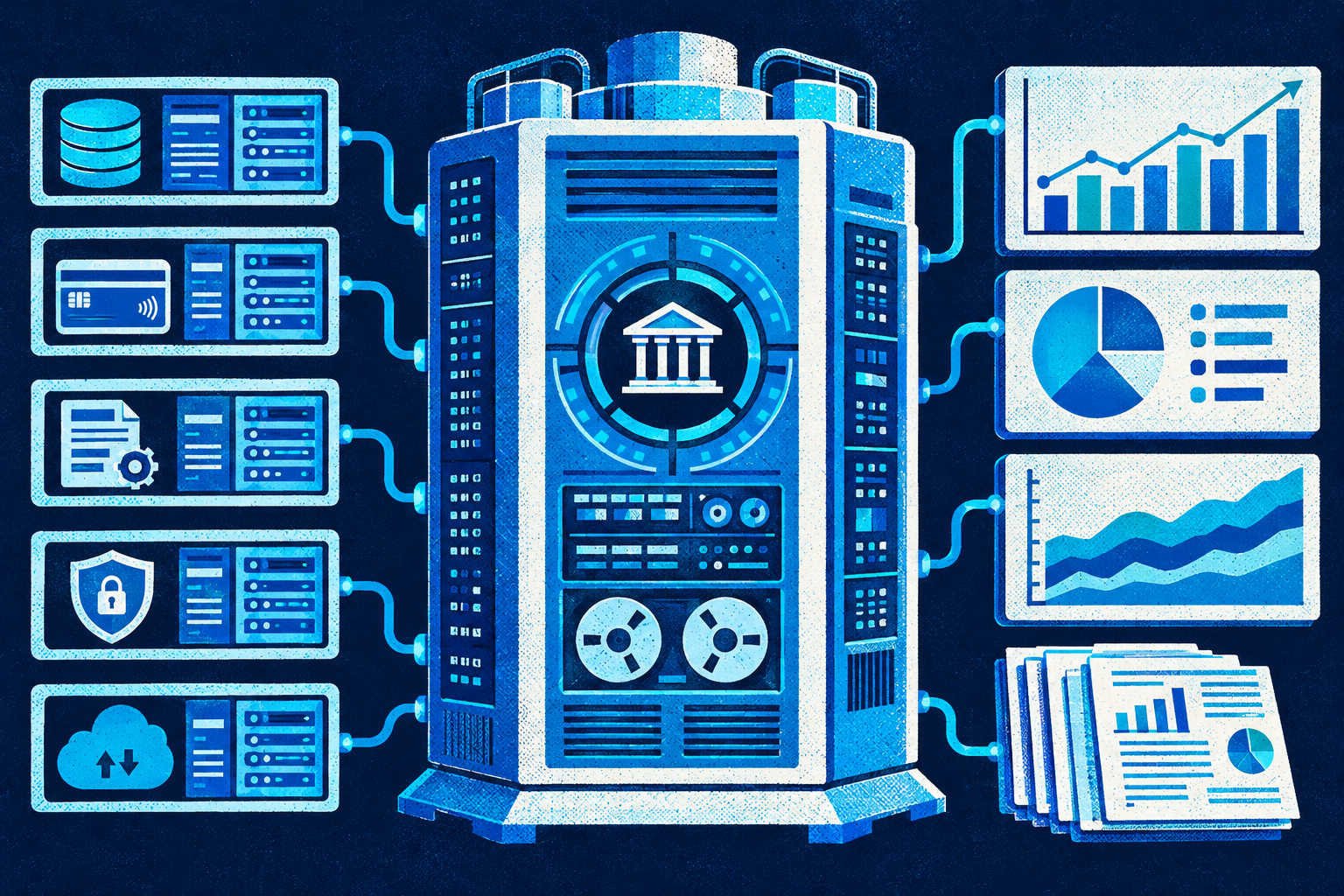
Plug and Play's 2026 financial services report shows venture money pouring into AI tooling, and mid-market firms will feel it as a stream of vendors pitching individual departments. An inventory of the AI tools you already have, and a named owner for it, is the practical place to start.
On November 12, Plug and Play Tech Center promoted its Financial Services Megatrends 2026 report with two figures: 58% of fintech venture capital went to AI, but only 30% hit AI-native startups. The post asks where the rest of the capital is going. It says the report covers where money is moving, why AI pilots get stuck, and how more than 40 startups are building the infrastructure behind agentic automation, AI governance and next-generation fintech.
Most commentary on numbers like these will tell financial services leaders that AI is reshaping the industry and that they need a strategy. I think the more useful reading for a mid-market bank, lender or insurer is about purchasing. Venture money becomes product, and product becomes sales calls. If a meaningful share of that money is going to companies that build pieces of the agent stack, such as orchestration, monitoring, document handling and governance, the practical result for a mid-market firm is a steady stream of small vendors, each pitching a narrow capability to whichever department will take the meeting.
Large banks typically have central architecture groups that decide which platforms the institution will standardize on. A mid-market firm usually has a much smaller technology group, and that group spends most of its time keeping the core system, the loan origination system and the reporting stack running. A department with a specific problem and a budget line can sign a subscription for a document-reading agent or a complaint-summarizing tool without waiting in that queue. Each of those purchases looks reasonable on its own, and many of them will solve the problem they were bought for.
Each one is also a third-party relationship. For banks, the federal banking agencies' 2023 interagency guidance on third-party risk management expects due diligence, contract review and ongoing monitoring scaled to the risk of the relationship. An AI vendor that reads customer data or influences a credit decision sits toward the higher end of that scale. Lenders and insurers outside bank supervision face comparable expectations from their own regulators and from the bank partners they depend on, so the paperwork burden of each new tool lands on someone in compliance or vendor management whether or not they were part of the decision.
I think agent sprawl is the next mess operations and compliance leaders will be asked to clean up. The pattern is easy to picture. Lending buys an agent that reads income documents. Deposit operations buys a different one for account opening, which reads many of the same items. Compliance licenses a governance tool to watch them, and it integrates cleanly with only one of the two. A year later the firm has several agents doing overlapping work, with separate configurations, separate data access, separate logs and different renewal dates.
The cost appears when someone asks a question that crosses departments. An examiner asks how a customer's documents were evaluated, and the answer depends on which door the customer came through. A complaint involves two agents and two log formats that don't line up. Consolidating at that point means migrating configurations, retraining staff, unwinding contracts and putting each change through change control, all of which is slower and more expensive than choosing deliberately the first time.
The governance startups in the Plug and Play report are part of the market's response to this problem, and some of them will be useful. A governance tool can record which agents exist and what they did. The decision about which agents the firm should have belongs to a named person with authority across departments, usually someone in operations or the CIO's office working closely with compliance. I think AI will shrink some internal development work over the next few years, yet the job of deciding what gets built and bought stays with people, and it gets bigger as the number of tools grows.
The friction here is real. Department heads who solved their own problem quickly will resist a review step, and a review that takes two months will push purchases into expense reports and free trials where nobody sees them. The intake check has to be light enough that people actually use it: one page, a handful of questions and an answer within days.
1. Build the inventory. List every AI tool under contract, in trial, or switched on as a feature inside software you already license, since many CRM, document management and loan origination products now ship with AI features. For each, record the process step it touches, the data it reads and writes, the business owner and the renewal date.
2. Group the list by the job each tool performs rather than by department. Overlaps become visible quickly, such as two tools reading the same document types or two products monitoring the same agents.
3. Write a one-page intake check that any new AI purchase passes through before signature, tied into your existing vendor management process. The first question should be whether something already on the list does this job.
4. Name an owner for the inventory and give that person the authority to approve, decline or redirect a request to a tool the firm already has.
5. Use upcoming renewal dates to consolidate overlaps, keeping the tool that fits your documented process and record-keeping best, and plan the transition through change control and staff training before the old contract lapses.
Dealing with a similar challenge?
We work with mid-market companies in regulated industries to build AI workflows that actually hold up.
Let's TalkSean Cummings
Founder of Laminar Consulting Services. Specializes in AI workflow automation for regulated industries — medical device, financial services, and complex logistics operations.