Accounts PayableAI AgentsCPG

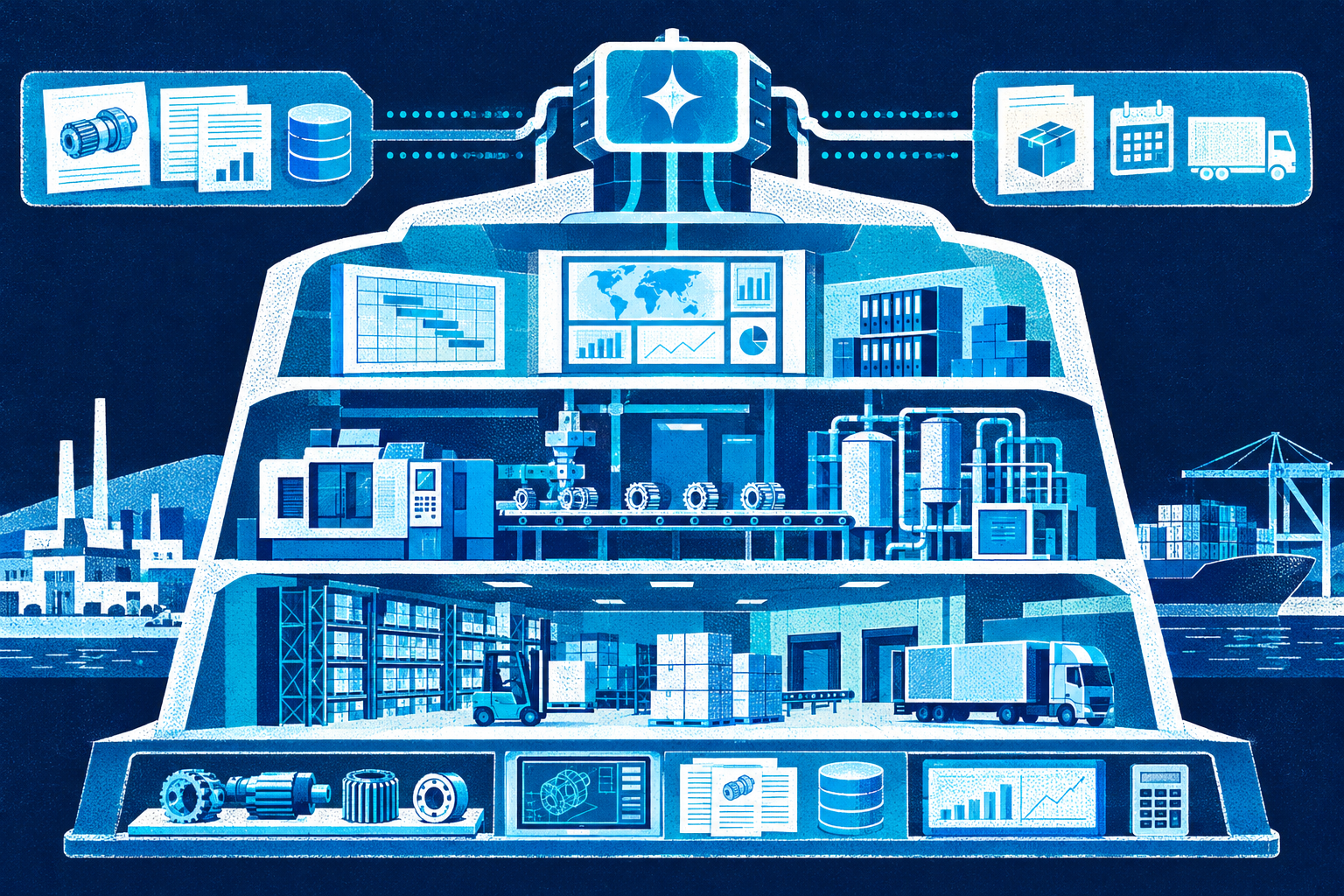
When a brand's AI agent agrees to a price or a delivery date, planning, the plant and finance have to keep that promise. The hand-offs behind the agent, and the product data it reads from, need work before it goes live.
On November 3, GreenCore Solutions, the Vancouver company behind gtinfetch.ai and A2A-Grocery.ai, announced an Agentic Shopping Hub for fast-moving consumer goods brands. As Streetwise Reports described it, the hub lets brands bring their own AI agents to a platform where customer agents now transact in retail grocery. The article's headline ties the launch to Walmart opening to AI agents. Most of the attention on news like this goes to the selling side, meaning how a brand's agent gets found and how well it represents the product. For a mid-market manufacturer, I think the more important question sits downstream. Once a brand's agent and a buyer's agent agree on something, that agreement has to reach the people and systems who will make, ship and invoice it.
Streetwise Reports lists the B2B retail functions where this kind of AI applies: demand forecasting, purchasing, inventory management, merchandising, pricing and retail execution. In most mid-market consumer goods companies, those functions belong to different teams working from different systems. An agent transacting on the brand's behalf can commit to a price, a quantity, a delivery window and possibly a promotional allowance. Each of those commitments is kept by someone other than the agent. Price and allowances land on trade spend and margin, which finance tracks, while quantity and date land on the production schedule and inventory allocation, which planning and the plant own.
I think the hardest part of most operations is visibility across those hand-offs: where an order stands, what was promised, and whether it will make money. A new sales channel tends to land on the same hand-offs as the old ones, only faster. If an agent's commitments live only in the platform's transaction log, planning learns about them when orders arrive, and finance learns about the promotional terms when a deduction shows up on a remittance. The agent will have done its job, and the company will still be reconstructing the deal by email.
There is a second gap that matters more with agents than with people. In many companies there is a sales process but few written rules. An experienced account manager knows not to promise a constrained item to a new account. That same person knows the price below which a deal loses money and knows the plant needs extra lead time on a certain pack size. Those rules live in people's heads. An agent will follow only the rules someone writes down, so documenting them, and deciding which commitments need human approval before they become binding, has to happen before the agent goes live.
The brand agent also describes the product, and it can only be as accurate as the data behind it: GTINs, pack and case configurations, dimensions, shelf life, ingredient statements and allergen declarations. In a growing company that data usually sits in several places, including the ERP, specification sheets, retailer portals and a spreadsheet someone in marketing maintains. That is normal for a company that has added products, plants and customers faster than it has cleaned up its records, and I think the sensible response is to plan for it. For food, supplements and consumer health products, some of those attributes are regulated label content. An outdated allergen statement repeated by an agent to a retailer is a labeling and quality issue as well as a data issue.
Planning for it means deciding which attributes the agent is allowed to present, naming one authoritative source for each, and deciding what happens when sources disagree. A reasonable default is that an item with conflicting data stays out of the agent channel until someone resolves it. Changes to regulated attributes should flow through the change control the quality team already runs, so the agent never publishes a value quality has not approved. Expect friction here. Quality will want to review the attribute list, and IT is usually busy keeping the ERP, EDI connections and existing retailer integrations running, so connecting an agent platform to order management and planning competes with that work.
The values themselves usually come from an approval process upstream. When Laminar built a web workflow application for Ventura Foods to replace a legacy RPG mainframe and manual approvals for new product development across its U.S., EU and Mexico facilities, the system included logic for choosing the manufacturing site. That project involved no AI. It shows where product decisions get made and recorded, and an approved record of that kind is the source an external-facing agent should read from.
Dealing with a similar challenge?
We work with mid-market companies in regulated industries to build AI workflows that actually hold up.
Let's TalkSean Cummings
Founder of Laminar Consulting Services. Specializes in AI workflow automation for regulated industries — medical device, financial services, and complex logistics operations.